
Finding useful home inspiration is easy. Finding ideas that actually work in an ordinary home is harder.
That is where TheHomeTrotters blog home ideas can be useful as a starting point for people looking for practical ways to improve their surroundings. TheHomeTrotters presents home-related content covering areas such as decor, interior design, repairs, and practical improvements. Its home decor section also includes articles focused on improving residential spaces.
TheHomeTrotters blog home ideas refer to practical inspiration for improving how a home looks and functions. Useful starting points include furniture layout, storage, lighting, personal decor, small-space solutions, DIY projects, and room-by-room refreshes. The best approach is to identify one problem in a space and make a focused improvement.
The important point is not to copy a room from a photograph. Instead, use an idea as a framework and adapt it to your room size, budget, lifestyle, and existing furniture.
What Does TheHomeTrotters Blog Home Ideas Mean?
The phrase can be understood in two ways.
First, it can refer to home inspiration published by or associated with TheHomeTrotters. The site’s publicly available material includes home decor and interior-design topics, while its broader content also touches on practical home improvement.
Second, people searching the phrase may simply be looking for practical home ideas connected with the TheHomeTrotters name.
That distinction matters because search results contain several websites using similar terminology. Some pages describe TheHomeTrotters in broad terms without providing enough evidence for every claim they make. A useful guide should focus on verifiable information and practical advice rather than treating every description online as authoritative.
Start With the Problem, Not the Decoration
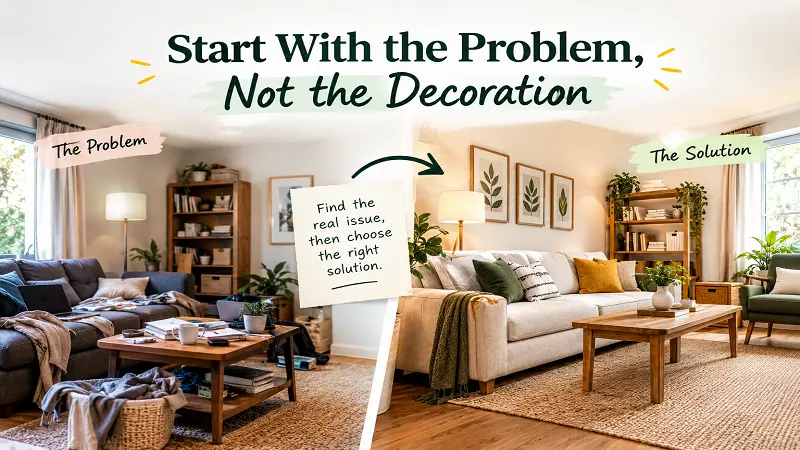
One of the easiest decorating mistakes is buying something before deciding what the room actually needs.
Instead, walk through the room and identify its biggest problem.
Is there not enough storage?
Does the furniture block movement?
Does the room feel unfinished?
Is there too much visual clutter?
Does the space need to perform several functions?
Once the main problem is clear, the solution becomes easier to choose.
For example, a small living room may not need more decorative objects. It may need a better furniture arrangement and one storage solution. A bedroom that feels bland may need improved bedding, artwork, or lighting rather than an expensive makeover.
This problem-first approach makes home projects more manageable.
Make Furniture Work Harder
Furniture has a major effect on how a room feels because it controls movement, seating, storage, and visual balance.
Before replacing furniture, try changing its position.
Create a clear path through the room and avoid pushing every piece against a wall simply because there is empty space in the center. A conversation area can often work better when seating faces a shared focal point.
Multifunctional furniture can also help when space is limited. A storage ottoman, extendable table, bench with hidden storage, or sofa bed can serve more than one purpose.
The goal is not to fill every available area. The goal is to make the available area useful.
Use Lighting as a Layered System
Lighting should not be treated as a single ceiling fixture.
A more flexible room usually combines different sources for different purposes. General lighting provides overall visibility, while task lighting helps with activities such as reading or working. Accent lighting can draw attention to artwork, shelving, architectural details, or a particular corner.
This approach also makes it easier to change the atmosphere of a room without changing its furniture.
For a simple update, consider where light is needed first. A reading chair may benefit more from a nearby lamp than from another decorative object.
Improve Storage Before Adding More Stuff
Storage is one of the most practical areas to address when refreshing a home.
Look for unused vertical space, awkward corners, and areas that collect objects repeatedly. Shelves, baskets, cabinets, hooks, and furniture with built-in storage can help keep frequently used items accessible without allowing them to dominate the room.
But adding storage is not always the complete answer.
If a cabinet becomes full immediately, the underlying issue may be excess belongings rather than insufficient furniture. Removing items that are no longer useful can sometimes make a greater difference than purchasing another organizer.
Give Small Spaces a Clear Purpose
A small room does not automatically need to look minimalist.
It needs a clear purpose.
A compact corner could become a reading area, work station, breakfast spot, hobby space, or additional storage zone. Once its primary function is decided, furniture and accessories can be selected around that purpose.
Using one area for several functions can also work. For example, a small desk can serve as a workspace during the day and a hobby area later.
The key is to avoid creating a space where every object competes for attention.
Add Personality Without Overdecorating

A home can feel personal without displaying something on every shelf.
Choose a few items that have meaning or genuinely fit the room. Artwork, photographs, books, textiles, plants, collected objects, and handmade pieces can all contribute personality when they are used intentionally.
A useful test is simple: if removing an object makes the room feel clearer without losing anything meaningful, the item may not be necessary.
This creates a more considered environment than buying accessories simply to fill empty surfaces.
Refresh a Room Without Renovating It
Not every home improvement project needs construction.
A room can feel different after a small number of targeted changes.
Try:
- Rearranging furniture
- Replacing tired textiles
- Editing crowded shelves
- Updating artwork
- Improving task lighting
- Adding useful storage
- Changing one focal area
- Repairing damaged or neglected details
- Reusing furniture in a different room
These changes are particularly useful for renters or homeowners who are not ready for a major renovation.
The advantage is that the result can be evaluated before committing to a larger project.
Use a Room-by-Room Strategy
Trying to redesign an entire home simultaneously can quickly become expensive and overwhelming.
A better approach is to work through one room at a time.
Living Room
Start with movement and seating. Make sure the main seating arrangement supports conversation and everyday activities. Then address lighting, storage, and decorative details.
Bedroom
Prioritize comfort first. Bedding, bedside lighting, storage, and the placement of furniture usually have more practical impact than adding numerous accessories.
Kitchen
Focus on workflow and accessibility. Frequently used items should be easy to reach, while rarely used objects can be stored elsewhere.
Bathroom
Look for opportunities to improve organization. Small shelves, baskets, hooks, and better placement of everyday products can make the space easier to use.
Entryway
The entrance sets the tone for the rest of the home, but it also has a practical job. A place for shoes, bags, keys, and outerwear can prevent clutter from spreading into other rooms.
A Simple Budget-Friendly Planning Method
Before buying anything, divide your project into three categories:
| Priority | Question |
|---|---|
| Function | What problem needs to be solved? |
| Existing items | What can be reused or rearranged? |
| New purchases | What is genuinely missing? |
This prevents a common decorating problem: spending money on attractive items while leaving the original problem unsolved.
For example, if the issue is a crowded living room, buying another side table may make things worse. If the issue is poor lighting, purchasing wall art will not solve it.
What Makes These Ideas More Useful?
The strongest home advice is not necessarily the most complicated.
It should help a reader answer three questions:
What should I change?
Identify the specific problem rather than attempting a complete makeover.
Why should I change it?
Understand whether the change improves storage, movement, comfort, appearance, or another practical need.
What should I do next?
Choose one manageable action and test the result before expanding the project.
That process turns general inspiration into something a homeowner can actually use.
Common Mistakes to Avoid
Some decorating mistakes are easy to overlook.
Buying everything at once can create a room that looks coordinated but does not necessarily feel personal.
Following a trend too closely can also produce a space that becomes dated or does not fit the people using it.
Another mistake is ignoring function. A beautiful room still needs comfortable seating, practical lighting, accessible storage, and enough space to move around.
Finally, avoid assuming that a more expensive item automatically creates a better room. Good decisions about scale, placement, proportion, and function can matter more than price.
How to Use TheHomeTrotters for Inspiration
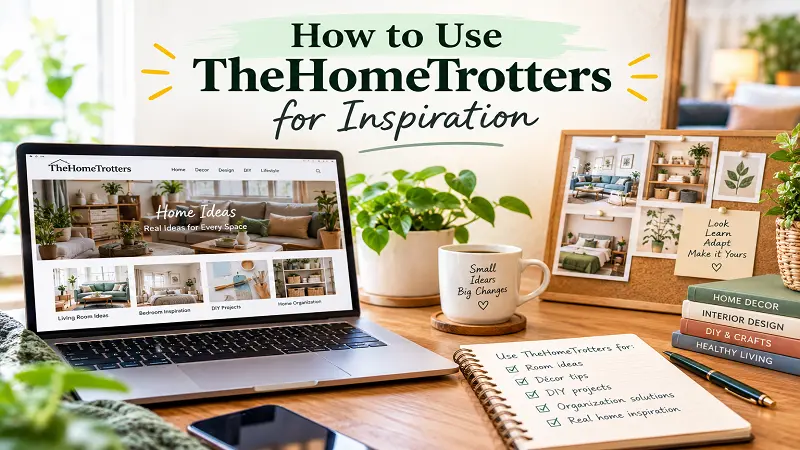
If you are using TheHomeTrotters as an inspiration source, do not approach the content as a list of rules.
Instead, extract the principle behind an idea.
If an article shows a well-organized small room, ask what makes the arrangement work. Is it the storage? The furniture scale? The layout? The limited number of visual focal points?
If you find a decorative idea you like, consider how it could be adapted to your own space rather than reproduced exactly.
TheHomeTrotters’ publicly available material emphasizes practical home content, including decor and home improvement topics.
Final Thoughts
The most useful TheHomeTrotters blog home ideas are not necessarily the ones that require the biggest transformation.
A better starting point is to understand what your home currently needs. Improve the layout, solve a storage problem, adjust lighting, create a clearer purpose for an awkward area, or add a few personal details.
Work one problem at a time.
That approach keeps decorating practical and gives you a better chance of creating a home that works for everyday life rather than simply looking good in a photograph.
7. FAQ Section
What are TheHomeTrotters blog home ideas?
They refer to home inspiration and practical improvement ideas associated with TheHomeTrotters, including areas such as decor, interior design, organization, repairs, and home improvement. The site’s home decor section currently publishes articles within this broader subject area.
Are TheHomeTrotters home ideas only for large houses?
No. The underlying ideas can be adapted to apartments, smaller rooms, rental properties, and larger homes. The important consideration is how the available space is used.
How should I start a home decorating project?
Start by identifying the biggest problem in the room. Decide whether the main need is better layout, storage, lighting, comfort, organization, or appearance. Then make one focused change before buying additional items.
Can I improve my home without a major renovation?
Yes. Rearranging furniture, improving lighting, editing clutter, updating textiles, adding storage, and changing a room’s focal point can all refresh a space without structural work.
Is every claim about TheHomeTrotters online reliable?
No. Search results contain multiple pages and domains discussing TheHomeTrotters, and some make broad claims that are not independently substantiated. It is better to verify brand-specific facts against the relevant site’s own pages before presenting them as established facts. see more